How to Photograph Rural Scenes Like a Boss
Learn 10 tips to improve your Rural photography.
Prefer to watch this tutorial in video format? 😏
In this tutorial, I'm going to walk you through ten tips to improve your rural photography. And by rural photography, I mean shooting in the countryside, ancient ruins, and abandoned destinations.
Let’s jump in!
Tip #1: Sync Nature with Man-Made
Tip number one is to learn how to sync nature with things that are man-made. I'd say this is probably the most important part of this genre of photography.
There’s a large group of people out there, especially in the landscape photography community, who don’t believe in including anything man-made in their shots. It’s gotta be all nature. And then there’s the other side of the spectrum, there’s the street photography crowd, who like purely human creations, architecture, and portraits.
Rural photography is the hybrid genre where you blend both. The key to doing this is to learn how to sync these elements together.
A great example of this would be if you see a power line that connects visually with a stream. You’re creating one line, but with two different subjects: the man-made power line and the natural stream.
Another example could be with shapes. Say you find square logs and connect them with a brick building. Now you’re creating a cohesive pattern that visually syncs nature and mankind together.
Looking for the seven Elements of Design and figuring out ways to connect them using the seven Principles of Art is a great way to navigate this genre of photography.
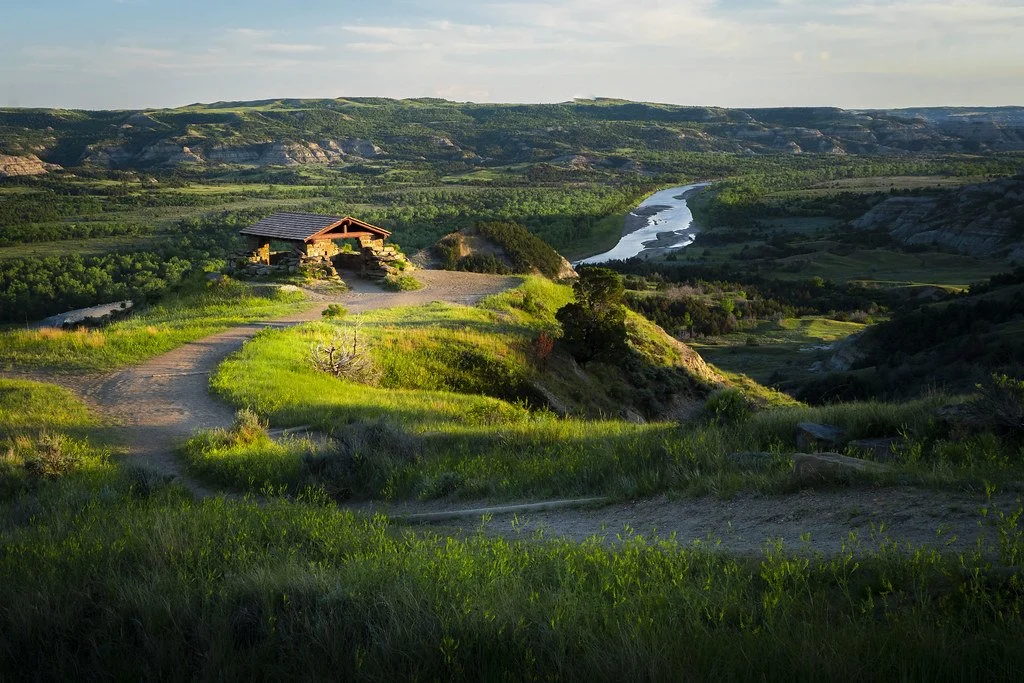
This photo, where a house pathway is connected with the line of river, was taken at Theodore Roosevelt National Park (North Division).
Tip #2: Control the Chaos
My second tip is to learn to control the chaos.
Shooting in urban, abandoned, and older places is messy. Most of the time they’re dilapidated, things are out of place, and pieces are falling apart. There’s not a lot of uniformity.
If you were to connect rural scenes to a genre of landscape photography, I’d say it’s most similar to shooting in a Forest. Let’s take that mindset into an abandoned factory, for example. You walk in, and there’s a lot happening everywhere, so just like in a forest, you’re going to have to isolate subjects and patterns that make up something beautiful.
I’d warm up the exact same way you’d warm up in a forest- start with small scenes. Maybe photograph a single screw on the ground, then work your way up to a broken mirror, and eventually to a giant silo from the inside with a staircase connecting it.
This doesn’t just apply to abandoned buildings- it can apply to ruins, old farms, and any other countryside structures.
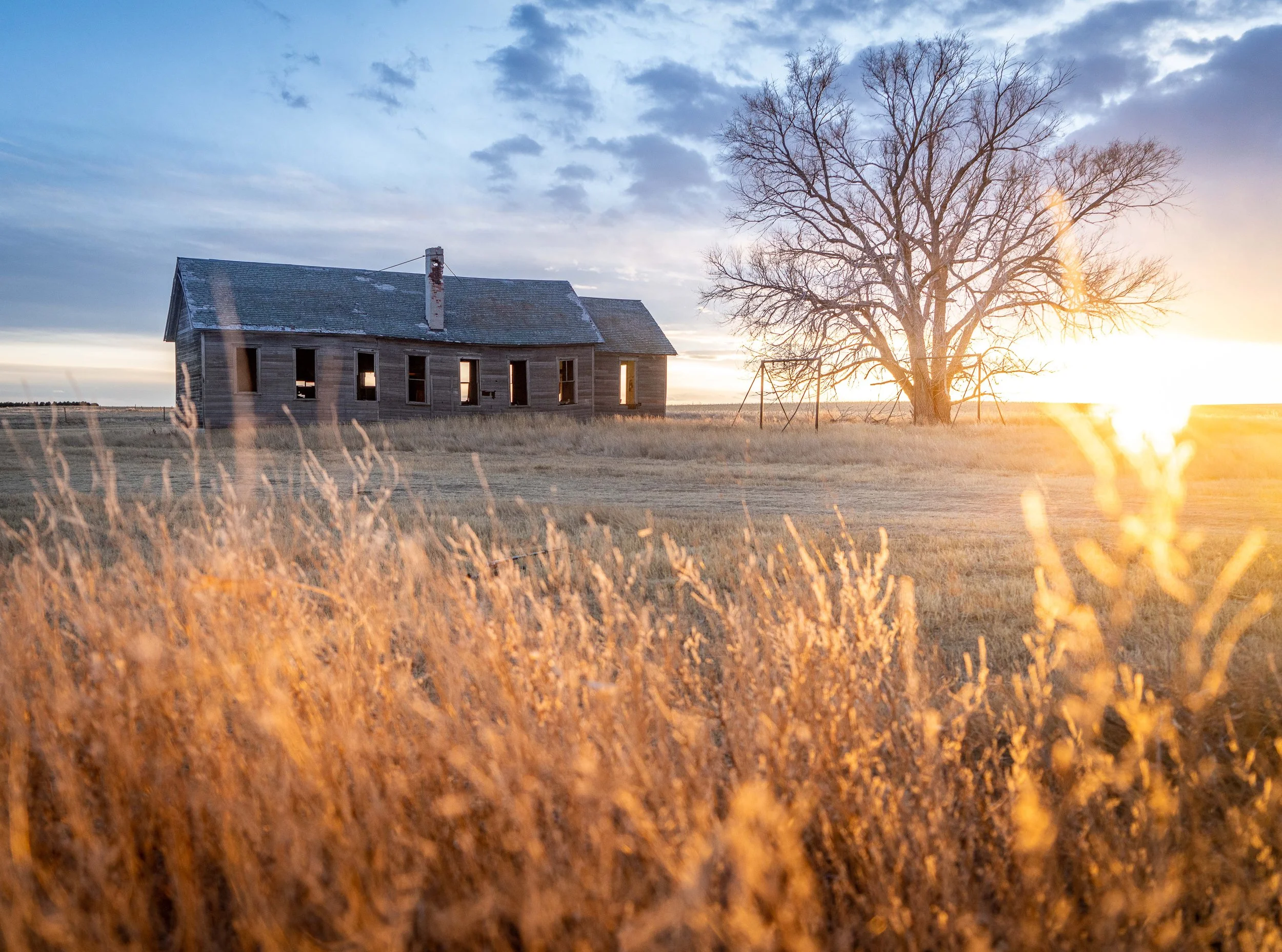
This photo, taken at Peace Valley School in the Colorado plains, combines the simplicity of structure, wheat, and a tree.
Tip #3: Learn About Function
This third tip I have for shooting rural scenes is to learn about the function of the building you’re trying to shoot. Then find a way to connect that function with your photography.
For example, if you’re shooting ancient ruins and there’s a pyramid or stone correlated with the Sun God, find a way to capture a sunstar in that image. Go back at sunset and get that sunstar right when the light touches the tip of the pyramid.
Or, if there’s a god of the underworld and a tomb or structure associated with it, figure out a way to make it look eerie. Consider going back at night or use light painting to illuminate it in a more haunting way.
Whatever the function of the item or place is, connect it with the way you display it in your photography. It’ll make your image that much more powerful.

This photo was taken at the Pirámides de Teotihuacan in Mexico. Although a rare event wasn’t happening at my time of visit, I centered this tree to give contrast and a sense of power to the image.
Tip #4: Lean into the Mystery
The fourth tip I have to pertain more to ancient ruins, but it can apply to any old structure with a story behind it. The interesting thing about older buildings is that they usually carry a connotation of mystery, higher power, or some kind of supernatural element.
Look at any building that’s been around longer than 100 years- there’s probably some story of a ghost haunting it.
A fun way to capture these buildings is to wait for an interesting event in nature to happen alongside them. For example, if there’s an eclipse, wait until you can capture it over the pyramids. Or, if there’s a rainbow taking shape, try to position it over a castle.
I know these moments are rare, but the more you go out and shoot, the more you’ll run into these special coincidences- and capturing them gives your images incredible power.
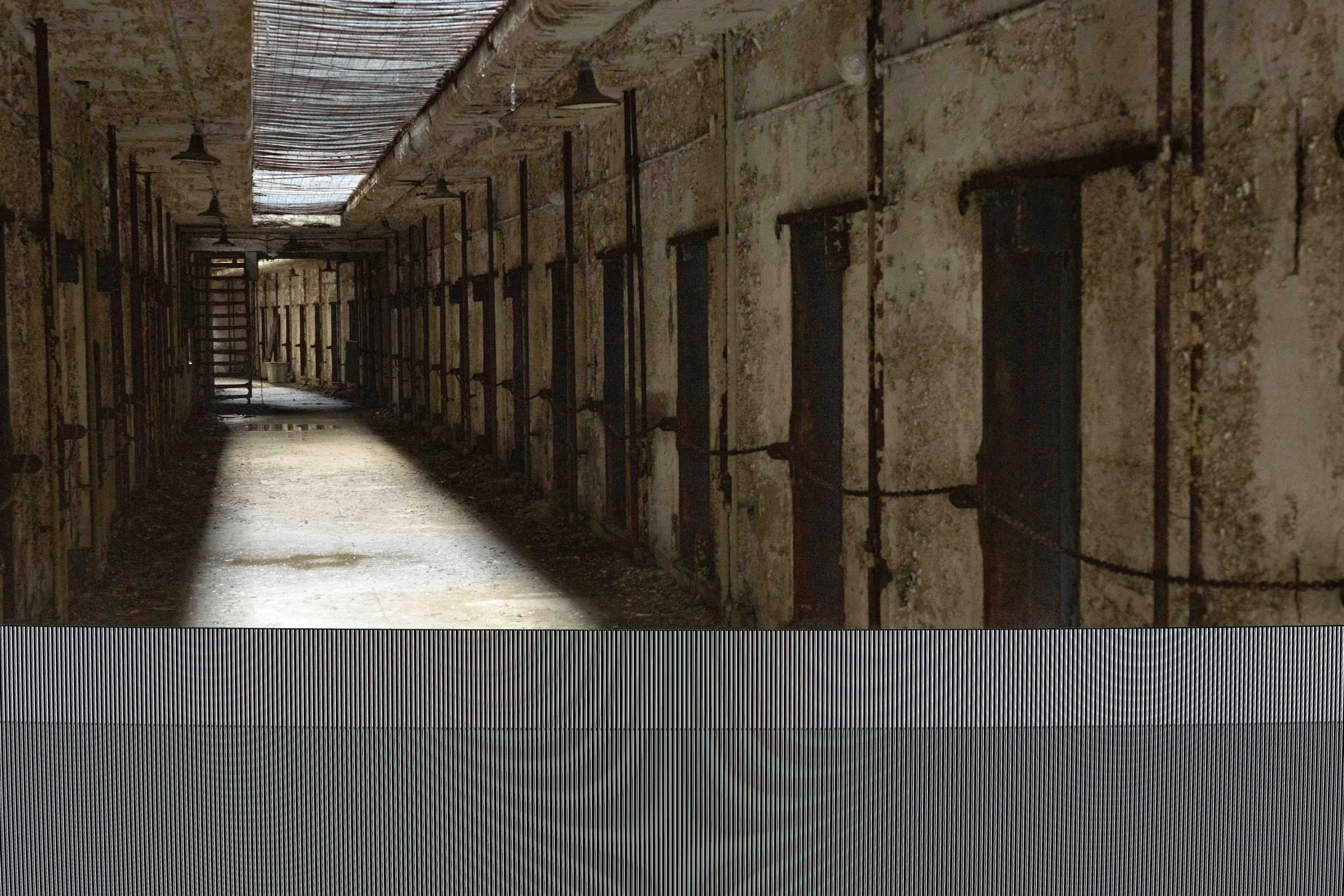
This photo, taken at East State Penitentiary in Philadelphia, gave off a camera glitch right when I was in the “haunted” hallway.
Tip #5: High Profile vs. Low Profile Spots
My fifth tip is about the difference between high and low profile locations.
This applies to any place that isn’t necessarily open to the public, which is where many rural scenes lie. Most ancient sites are managed by the local or state government, and you usually pay a fee and enter during set hours. But abandoned places- like factories, asylums, or hospitals, are usually completely closed off to the public. Entering these areas is impossible without trespassing.
That’s why it’s important to understand whether you’re entering a low-profile or high-profile area.
A high-profile area will have more security, like guards, alarms, motion sensors, and/or cameras. These places are much harder to access and there’s a higher chance of getting caught.
For example, when I went to New Orleans, there’s a Six Flags park that was destroyed by Hurricane Katrina and never reopened. It’s a popular spot for urban exploration, and the local government has hired a full-time security force to protect it. I pulled up to fly my drone over it, and before I even left my car, a security agent came up and told me I couldn’t be there.
You have to be discreet if you’re planning on exploring a place that’s well-known or has gotten media attention. This usually involves any place that has more than three mainstream articles about it online.
That said, many of the “security measures” at these places aren’t real. A surprisingly high amount of cameras aren’t actually recording, barbed wire is set up in ways that can be easily stepped over, and signs about motion detectors and alarms are often bluffs.
On the other hand, low-profile areas are the complete opposite of the high profile ones. There’s usually no fence, no security, and no people around. Usually you can just walk right in, given no civilians are watching. (You’d be surprised how many random people might call the police on you.) These places usually aren’t well known, are freshly closed, or are kept secret within the urban exploration community.
In general, the “cooler” the spot, the higher the chance it’s going to be high profile. An abandoned hospital, for example, will draw a lot more attention than a single broken-down house in the middle of nowhere.
One thing to remember: you can always ask for permission. For example, I know of an abandoned slaughterhouse in Colorado where the owner actually gives tours.
If you find out who owns the property, you can often ask for permission. Many owners are happy to let you in, especially if you offer to send them some of your photos afterward. It’s rare for them to see their property professionally photographed, and many appreciate it as long as you’re respectful (and a good photographer!)
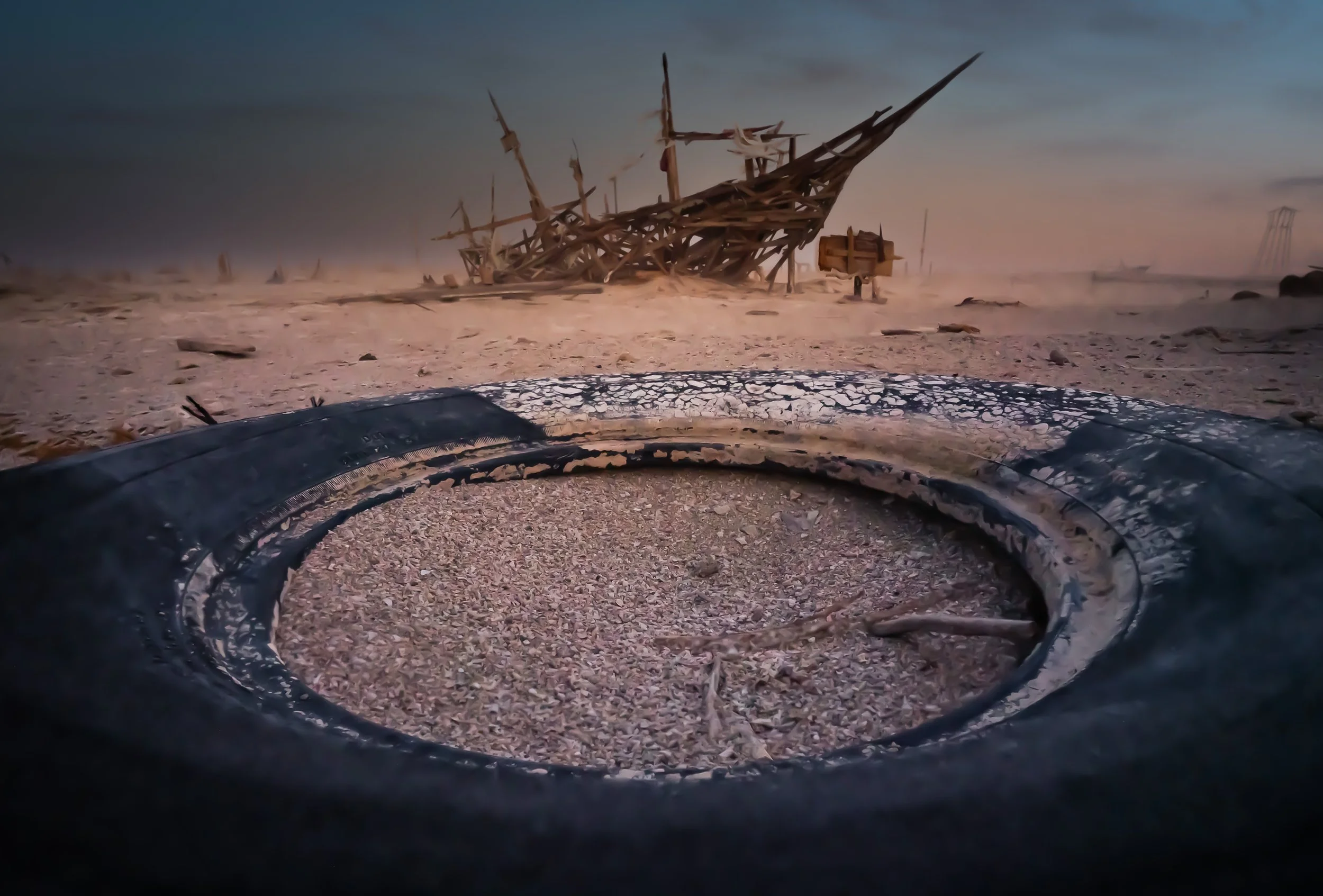
This photo was taken at Bombay Beach in southern California. The abandoned resort town is now home to several rogue art displays, making it a low-profile spot for exploration.
Tip #6: What To Do If You’re Caught Where You Shouldn’t
My sixth tip is about what to do if you’re caught exploring where you shouldn’t.
It’s bound to happen eventually, no matter how careful you are. If you explore regularly, someone will catch you at some point.
If it’s a private landowner, be as polite as possible. Many people, depending on the state or county, are legally allowed to defend their property, so stay calm. I always play the photographer card: “Hi! I’m a photographer, and I’m just looking for some shots. If you want me to leave, I’ll leave.”
If law enforcement shows up, again, be respectful and don’t make a scene. I’ve been caught several times, but I’ve never gotten trespassing charges. As long as you’re not destroying property or causing a disturbance, and you show them you’re just taking photos, you’ll almost always be fine.
Tip #7: Don’t Get Sidetracked By Graffiti
My seventh tip is to not get too sidetracked by graffiti or street art.
It can be tempting to take photos of a crazy graffiti-covered wall and post it on social media. However, I’m always cautious about doing this because it feels like you’re taking someone else’s art and claiming it as your own. Usually, there’s not much creative thought involved- you’re just photographing someone else’s work.
Unless it’s a wall covered with various pieces that can’t be attributed to one artist, or the art is necessary to capture a bigger scene, I try to avoid it.

This photo of a graffiti wall was taken in the RiNo District of Denver, Colorado.
Tip #8: Keep Safety in Mind
My eighth tip, although obvious, is to keep safety in mind.
When you’re exploring old places, there’s usually a good reason they’ve been abandoned. Most of these structures haven’t met building codes for years, possibly even decades. You’re going to encounter walkways and ladders that are unstable and falling apart.
If you’re on an upper floor, always check the ground to make sure it’s sturdy. Avoid holes in the ceiling, sagging drywall, or old, wooden floorboards. I always make an effort to try to walk on the metal beams (if visible) anytime I’m in an abandoned building.
I once had a friend who was shooting on a four-story building with me. She backed up, fell halfway through a hole, and barely caught herself from falling. Things can escalate very quickly if you’re not constantly aware of your surroundings/
Like climbing in the Mountains, always maintain three points of contact- either two hands and one foot, or two feet and one hand. Make sure what you’re holding onto is sturdy; steel or metal is usually reliable, while wood is not.
You should also wear a mask, specifically a P100 mask. If you only explore once or twice a year, it’s not a big deal, but if you do it regularly, you don’t want to breathe in asbestos, dust, mold, or god-knows-what chemicals. You have no idea what was made in those buildings.
Lastly, wear good shoes, preferably hiking boots with solid soles. Don’t wear sandals or flip-flops. In very old structures, you’ll usually encounter glass, nails, and sharp metal objects on the ground. Make sure your tetanus shot is up to date!

This photo of an abandoned room was taken at Forbes Park in Boston, Massachusetts. The red caution tape gives a harrowing warning of what may lay below.
Tip #9: Bring a Friend or Tell a Friend
My ninth tip is to bring a friend or at least tell someone where you’re going, especially if your destination isn’t a formal site.
If you get hurt in these places, (like falling through a staircase, for example,) you might not be found for days or even weeks. Some of these locations don’t see visitors for months.
Always tell someone where you’re going, or better yet, bring a friend. It helps to have another pair of eyes and someone to discuss safety decisions with.

This photo was taken at Forbes Park in Boston, Massachusetts. Although I explored it alone, I let several family members know where I’d be beforehand.
Tip #10: Realize You Might Not Be Alone
Tip number ten is to realize that you might not be alone in these locations.
Abandoned places, ruins, and rural buildings can be hotspots for the homeless, drug activity, or even other explorers whose intentions might not be clear.
If you encounter a homeless person, be cautious and respectful. The same goes for illegal activity. I once accidentally drove up to a drug deal at an abandoned building in the California desert. I stayed in my car, saw what was happening, and immediately turned around. It’s not worth the risk to engage in any way, shape or form.
Other explorers can often be friendly, but you still need to be aware. Sometimes teenagers like to come to these places to destroy things, which could be a piece of the building fundamental to your escape, or even worse, starting a fire. Read the news, and you’ll see this isn’t entirely uncommon.
Always be mindful of your surroundings and remember you’re not guaranteed to be alone!
Those are my ten tips for rural photography! Let’s go ahead and jump into the next tutorial, where I’m going to cover ten tips to improve your Seascape photography!